Welcome!

  • Why Design Thinking matters – Pill 027

    I think this is a quite of a buzz word, Design Thinking has gained a lot of interest in the last years. I came across a post from HBR that states “Why Design Thinking Works“, and I started to think not just why it works, but why it matters.

    I like to think about Design Thinking as a mindset, you need to shift your perspective and goal in order to embrace Design thinking, why it matters? Think about these 4 concepts:

    Human-centered: Human-centered is where we always start, with people. With real human beings. Not demographics or segmentation schemes. Design thinking emphasizes the importance of deep exploration into the lives and the problems of the people we hope to generate value for before we’re allowed to start generating solutions. It’s also enthusiastic about engaging other human beings in co-creation.

    Possibility Driven: it uses this information we’ve learned to ask the question, what if anything, were possible? As we begin to create new ideas about how to serve them and follow transcript. It also focuses on generating multiple option, and avoids putting our eggs in particular solution basket.

    Options focused: We expect to be wrong a lot, so we want to put multiple irons in the fire and let our stakeholders tell us which works for them, which means we want to manage a portfolio of new ideas

    Iterative: It’s committed to conducting cycles of real world experiments rather than running analysis using historical data.I t’s a process of continuously forming and testing and then reforming our ideas about what works. We don’t expect to get it right the first time. We expect to iterate our way to success.

    So..why does it matters? Because putting people first, accepting failure and different options can make really the world a better place.
  • Reactions to Change – Pill 026

    Change by definition is “to make the form, nature, content, future course, etc., of (something) different from what it is or from what it would be if left alone”. After talking about how to prepare and execute change, let’s see which reactions can be experienced.

    People can react in different ways to change that impact them somehow.

    Reactions to change may take many forms.

    1. ACTIVE RESISTANCE is the most negative reaction to a proposed change attempt. Those who engage in active resistance may sabotage the change effort and be outspoken objectors to the new procedure.
    2. Then we can experience PASSIVE RESISTANCE involves being disturbed by changes, without necessarily voicing these opinions. Instead, passive resisters may dislike the change quietly, feel stressed and unhappy, and even look for a new job, without necessarily bringing their concerns to the attention of decision makers. 
    3. COMPLIANCE, involves going along with proposed changes, with little enthusiasm. 
    4. Finally, those who show ENTHUSIASTIC SUPPORT are defenders of the new way and actually encourage others around them to give support to the change effort as well.

    To be successful, any change attempt will need to overcome resistance on the part of employees. Otherwise, the result will be loss of time and energy, as well as an inability on the part of the organization to adapt to the changes in the environment and make its operations more efficient. 

  • Executing change – Pill 025

    After preparing for change is time for the executing. At this stage, the organization implements the planned changes on technology, structure, culture, or procedures. The specifics of how change should be executed will depend on the type of change. However, there are two tips that may facilitate the success of a change effort.


    PROVIDE SUPPORT: As the change is under way, employees may experience high amounts of stress. They may make mistakes more often or experience uncertainty about their new responsibilities or job descriptions. Management has an important role in helping employees cope with this stress by displaying support, patience, and continuing to provide support to employees even after the change is complete.

    CREATE SMALL WINS: During a change effort, if the organization can create a history of small wins, change acceptance will be more likely. If the change is large in scope and the payoff is a long time away, employees may not realize change is occurring during the transformation period. 


    However, if people see changes, improvements, and successes along the way, they will be inspired and motivated to continue the change effort. For this reason, breaking up the proposed change into phases may be a good idea because it creates smaller targets. 

    Small wins are also important for planners of change to make the point that their idea is on the right track. Early success gives change planners more credibility while early failures may be a setback.

  • Preparing for change – Pill 024

    As their definition, Projects bring change most of the times, since they deliver something new to the organization, and unique. So what to keep in mind when delivering a Project?

    Many change efforts fail because people are insufficiently prepared for change. When people impacted by the project (that we should have mapped within the Stakeholders) are not prepared, they are more likely to resist the change effort and less likely to function effectively under the new system. 
    What can organizations do before change to prepare stakeholders? There are a number of things that are important at this stage. 

    Do people know what the change entails, or are they hearing about the planned changes through the grapevine or office gossip? 


    When employees know what is going to happen, when, and why, they may feel more comfortable.

    Research shows that those who have more complete information about upcoming changes are more committed to a change effort.

    Moreover, in successful change efforts, the leader not only communicates a plan but also an overall vision for the change. When this vision is exciting and paints a picture of a future that employees would be proud to be a part of, people are likely to be more committed to change.

    So it’s fundamental to share the objectives and goals early in the project to be sure that everyone is aligned and can embrace the change that will occur.

  • Test Driver Development – Pill 023

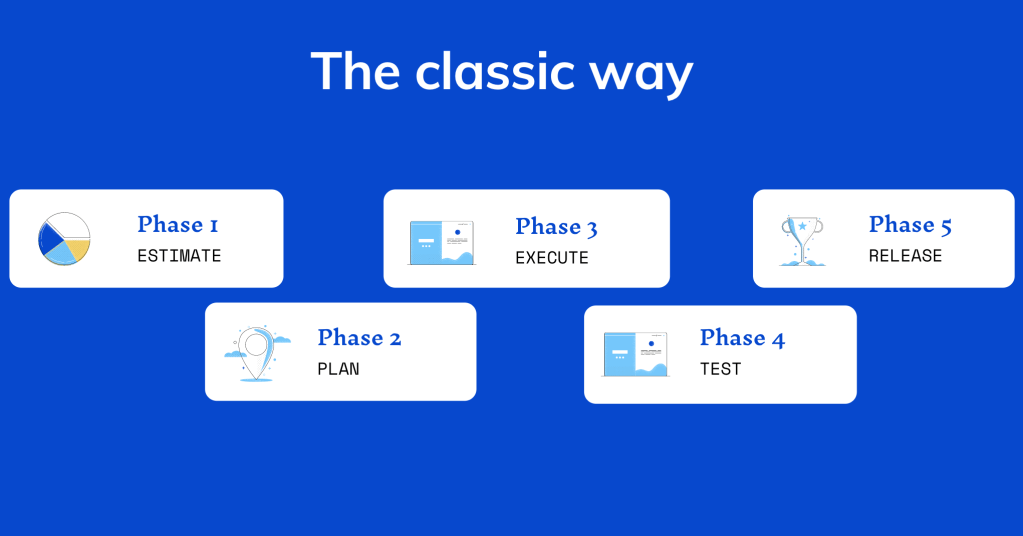
    First, let’s recap what we all have learned about Project Management phases and timelines, they look most of the times like this:

    So, what’s wrong with that? This is as that worked for the last 30 years (and still working). The thing that is wrong about it is that we live in times where everything must be customer centric (or user centric, or if you prefer “Human Centric”).

    Even if the TDD is quite “old” as a practice, I think is a great starting point on trying to shift the development from a classic approach to an agile one, where we care more about how the end user experience would be, how the actions needed to complete an interaction would be.

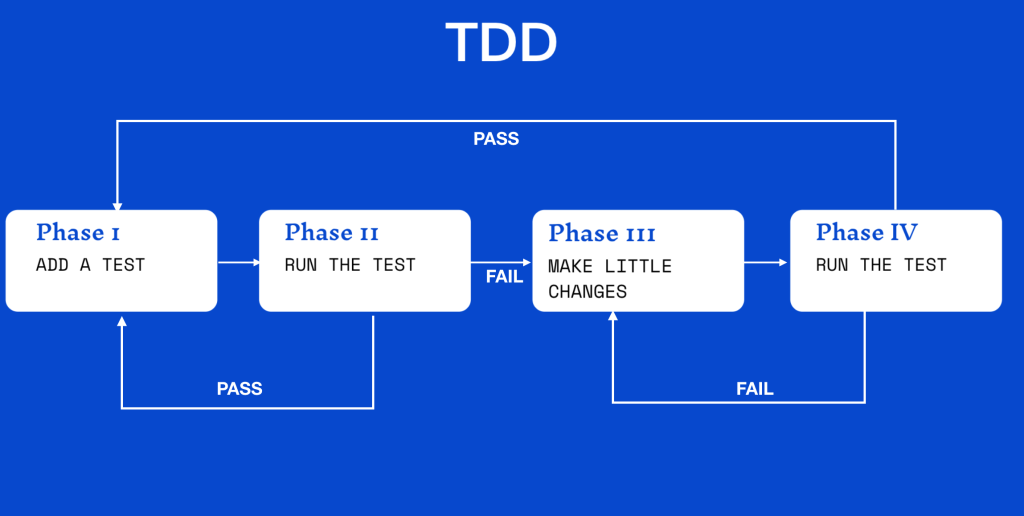
    So, what is TDD? First, it was “created” by Kent Beck and just like in agile approach, TDD consists of small iterations where test scenarios drive the projects

    .In test driven development, you begin by writing the test cases covering the new functionality, then you write the production code necessary to make the test pass, and after that you refactor the code to make it more maintainable. So, it would look like that:

    As always, these pills are written to inspire some curiosity on you, if you want to find more about TDD it’s plenty of articles, enjoy your reads!

    PS: Remember to

    • Subscribe to my blog if you like it
    • Comment with your thoughts and opinions
    • Add me to your LinkedIn network here
  • Company Structure and Innovation – Pill 022

    In Pill 017 I’ve shared the A-B-C concept about how to shape culture of change and innovation, but that depends on the company’s structure within we are moving.

    Company structure are fundamental to shape culture of sharing and innovation. We can talk about two configurations of organizational structures, mechanic structures and organic structures


    Mechanistic structures are those that resemble a bureaucracy. These structures are highly formalized and centralized. Communication tends to follow formal channels and employees are given specific job descriptions delineating their roles and responsibilities. 

    In contrast to mechanistic structures, organic structures are flexible and decentralized, with low levels of formalization. 
    In organizations with an organic structure, communication lines are more fluid and flexible. 

    Employee job descriptions are broader and employees are asked to perform duties based on the specific needs of the organization at the time, as well as their own expertise levels. 
    Organic structures tend to be related to entrepreneurial behavior and innovation.

    Mechanistic organizations are often rigid and resist change, making them unsuitable for innovation and taking quick action.